
There's an old saying in trucking: the wheels have to keep turning. Fuel doesn't wait. Insurance doesn't wait. Truck payments don't wait. The moment a driver drops your freight and hands over the proof of delivery, their clock is already running on the next expense. Your payment terms, however, might be set to "net-60" — and somewhere in that gap, someone is quietly carrying your freight bill on their back.
That someone is usually a small carrier. Or a single owner-operator who bet everything on a used Peterbilt and a prayer. And you — the shipper — may not think about it much, because the industry has trained everyone to accept delayed payment as just the way things work.
It isn't. It's a choice. And it's worth examining whether it's still the right one.
Freight factoring exists for one reason: shippers got comfortable paying late, and carriers couldn't survive the wait. So a financial middle layer grew up to solve the problem — buying invoices at a discount, giving carriers fast cash, and quietly clipping a percentage of every load for the privilege.
That percentage — typically 2% to 5% per invoice — doesn't come from nowhere. It comes out of the margin that was supposed to keep a carrier's operation viable. Multiply that across thousands of loads a year and you've got a significant, systemic drain on the people doing the actual physical work of moving America's freight.
The freight industry normalized this so thoroughly that many shippers today have never stopped to ask: what does it actually cost me, not just them?
Here's the honest case that shippers make internally for net-30 or net-60 terms: it's essentially an interest-free loan from your suppliers. Keep cash in the account, earn a little interest, use it elsewhere. Smart treasury management.
That logic holds — right up until the moment something disrupts it.
I remember watching this play out firsthand. An old boss of mine got into a dispute with a vendor — fuel cards, specifically. He figured he'd just hold payment while the disagreement sorted itself out. Reasonable enough in theory. Except those fuel card bills don't stop accumulating just because you're in a dispute. Every truck in the fleet was still gassing up. Every week that passed, the number got bigger. What started as a manageable disagreement became a figure that was genuinely hard to pay when the dust finally settled.
The dispute didn't freeze the bill. It just froze the payment. Those are two very different things.
Deferred payables have a way of quietly compounding into something much larger than the original amount in dispute. And in volatile freight markets — where rates swing, capacity tightens overnight, and your best carriers have options — a reputation for slow payment is a liability that doesn't show up on any balance sheet until it's too late.
When freight markets get choppy — and they will — shippers who have cultivated genuine relationships with reliable carriers are protected. Those who treated carriers as interchangeable vendors to be paid whenever convenient will find themselves at the back of the line.
Good carriers remember who treated them right. Owner-operators talk. Fleet managers compare notes. In a tight capacity environment, the shippers with a reputation for fast, clean payment get their calls answered first. The ones with net-60 terms and a habit of short-paying invoices get ghosted.
There's also a harder, more practical reality: when your own cash position is uncertain, carrying large deferred payables is a risk. If your business hits turbulence at the same moment a stack of freight invoices comes due, you're managing a liquidity problem on top of an operational one. Paying when services are rendered keeps your books cleaner and your obligations current. You always know exactly where you stand.
The American trucking industry loses small carriers every year — not because they were bad at trucking, but because they were bad at surviving 45-day payment cycles with a thin cash cushion and a truck payment due on the 1st. When those carriers disappear, capacity shrinks. When capacity shrinks, your rates go up.
Shippers who chronically delay payment are, in a very real way, slowly degrading the pool of carriers available to serve them. It's a slow process, invisible at the invoice level, but it shows up eventually in the spot market when you need capacity and can't find it at any reasonable rate.
Paying promptly isn't charity. It's an investment in the infrastructure that keeps your supply chain moving.
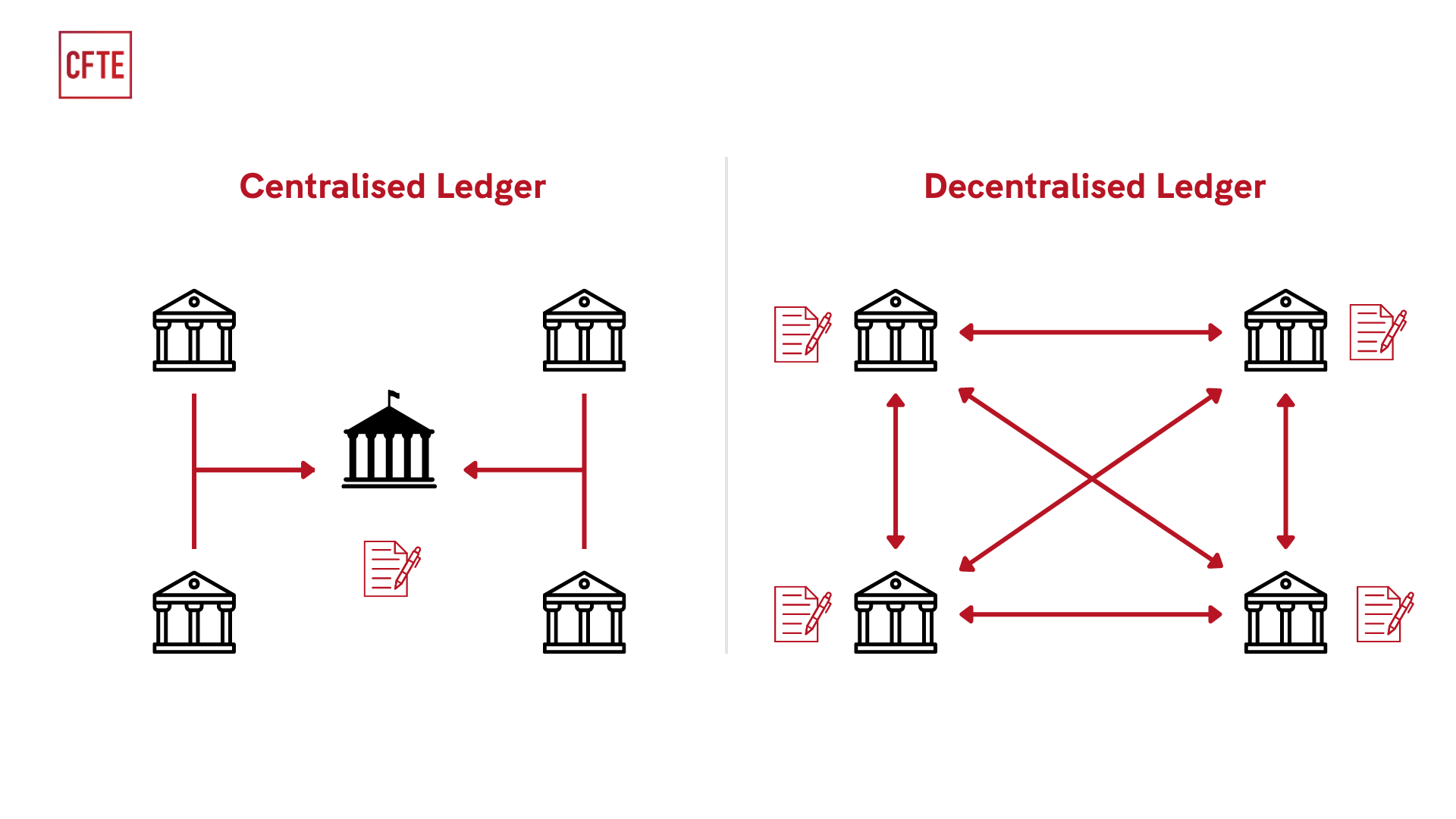
Centralized: payment routed through brokers and factoring companies — one gatekeeper, one cut at each step. Decentralized: direct from shipper to carrier, settled by smart contract on delivery.
Beyond the math, there's something simpler at work. How you pay says something about how you do business. Carriers — especially experienced owner-operators who've seen everything — can read a shipper quickly. The ones who pay clean and pay fast are known quantities. The ones who stretch terms, short-pay, and make carriers chase invoices are known quantities too.
In a world where capacity is increasingly portable and carriers have more options to work with platforms that treat them as partners rather than receivables to be managed, that reputation matters more than it ever has.
Some shippers have always understood this. They don't live on credit because they don't need to. They pay for what they use, when they use it, and they've built a carrier network that reflects that approach. Their lanes are covered. Their relationships are strong. And when the market gets weird, they're the last ones to feel it.
Net-30, net-60, and factoring aren't laws of physics. They're conventions that calcified around a set of financial habits that made sense in an era of paper invoices and slow bank wires. That era is over.
Instant payment on delivery is not only possible — it's here. Shippers who adopt it aren't just being generous. They're being smart. They're eliminating a class of financial risk, building durable carrier relationships, and positioning themselves as preferred partners in a market that rewards exactly that.
The question isn't whether you can pay when services are rendered. The question is whether you've given yourself a good enough reason not to.
DecentralFreight was built on a simple idea: when a driver drops your freight and the BOL is signed, the job is done. Payment shouldn't require a phone call, a net-30 wait, or a factoring company taking its cut. It should happen the same way the delivery did — immediately, verifiably, and without a middleman in between.
If you're a shipper who believes that, we built this platform for you.
DecentralFreight is live on Base Sepolia testnet and gearing up for full launch Summer 2026.
Get Early Access →